Instagram @evolvingknowledge

View this post on Instagram

@evolvingknowledge

A post shared by Evolving Knowledge (@evolvingknowledge) on

“Vibe so high that toxic people in your life disappear because they no longer know how to approach you”

For those of you who do not know what a “vibe” is, it is energy, frequency, a sense, and that “feeling” you get when you are around someone or something. It is an invisible force that makes us aware of each other’s energy.

Us humans–rather, we animals–possess a unique energy that resonates with the world around us. Our energy is controlled by emotions, responses, thoughts, and attitudes. Energy is also the aura that surrounds us during our day-to-day living and can be felt by animals, people, and the universe. It is real. An example would be an angry, sad, or happy dog. That feeling/intuition you get that says “back off, help, or pet the dog” is expressed by the dog’s current mood/vibe. It is not something that is explicitly expressed.

Vibes, feelings, auras, and energy are never explicitly expressed (unless outright spoken) because they are implicitly derived. They come from within us, and usually cannot be controlled unless we consciously control them. Meaning, unless we are consciously telling our self to “be happy, be happy, be happy,” we will not be happy and the influences that surround us will impose themselves onto us.

Think of it like we are a blank piece of paper. Nothing is on it until we put something on it. We can write, draw, and do whatever we want, but so can other people. They can rip, burn, write, draw, and either build-up or destroy our piece of paper. If we let them.

This is confusing even for me to read, so allow me to explain.

Think about it this way:

The left side of your brain is the logical mind–analytical, factual, organized, intellectual. The right side of your brain is the creative mind–emotions, compassion, art, imagination.

When we become angry, we cannot think straight and our judgment is cloudy. Hence why we break things, say things we do not mean, and flip out. Once we are calm, we can think clearly and label the emotion as “anger.” The right side of our brain acted first through emotional rage, causing us to act irrationally. After, the left side of our brain came along to calm us down and clear our mind. Unless we know our self well enough to identify our emotions the moment they happen, emotions will always take the first step. We will always feel the emotion first before we can identify and decipher what truly happened. This whole scenario formulates our “vibe.”

Vibe = Aura = Energy = Emotions = How We Feel = How Are Energy is Expressed.

Emotions are always temporary and will always be temporary. No one can be angry, sad, happy, disgusted, surprised, or scared all the time. If humans were experiencing these emotions every second of every day, then they would go crazy! (Yes, some people have minds that deal with this on an extreme level, but the healthy human mind does not). In fact, it is recommended that you do not stay in one emotion for a long time, otherwise you lose the ability to appreciate other emotions. You cannot appreciate happiness without sadness.

If you have incredibly strong emotions that persist daily and have a negative impact on your life, then I would suggest you see a therapist or licensed professional.

Anyway! Our vibe is our emotions, and if we let other people ruin our vibe, then we are allowing them to ruin our emotions. And since emotions are incredibly strong, they have the potential to uplift or ruin our life. So if we vibe high enough that we do not allow toxic people near us, we are saying that we will not allow people to affect the way we decide to feel. This will create a very strong sense of empowerment for yourself and will allow you to be in total control of your life.

Side Note: DO NOT ignore your emotions. Acknowledge them, decipher them, and allow your logical mind to rationalize/understand them. Ignoring your emotions makes you apathetic, which will make you less compassionate and loving. Do not become a robot!

With so many humans surrounding us all the time, it can be easy to allow others to have a grand influence on our lives. Everyone is living their own life filled with memories, experiences, heartaches, problems, and so much more. Whatever you have gone through in your life, other people have done the same but in their own way. Always remember that you are living your life, and they are living theirs. No matter how often or how much someone tries to dictate your life, do not allow them to, they are not you.

Vibin’,

E.
Source: from Instagram @evolvingknowledge Thank you for the inspiration!

#Vibe #Energy #Frequency #Aura #Emotions #Intuition #Feelings #Mood #MentalHealth #Psychology #Philosophy #YourLife #LeftBrain #RightBrain #Animals #Universe #EvolvingKnowledge
Depression Education & Awareness

Depression is the “umbrella term” given to a group of conditions that can lower or alter our mood without notice. There are many types of depression, and they all stem from our biology, the environment, and personal perspective. Depression is a mental health issue around the world that has always had a negative stigma to it, thus making it harder for people to get treated. By educating ourselves and becoming more aware about what depression is, we can help save millions from a world of pain, suffering, and sadness.

The Facts

  • Major depressive disorder affects approximately 17.3 million American adults, or about 7.1% of the U.S. population age 18 and older, in a given year. (National Institute of Mental Health “Major Depression”, 2017)
  • Major depressive disorder is more prevalent in women than in men. (Journal of the American Medical Association, 2003; Jun 18; 289(23): 3095-105)
  • 1.9 million children, 3 – 17, have diagnosed depression. (Centers for Disease Control “Data and Statistics on Children’s Mental Health”, 2018)
  • Adults with a depressive disorder or symptoms have a 64 percent greater risk of developing coronary artery disease. (National Institute of Health, Heart disease and depression: A two-way relationship, 2017)

Source: Depression and Bipolar Support Alliance

Based from the information above, you can see that depression does not play favorites when it comes to who it can affect. A sad but necessary truth to acknowledge if we want to change how we view depression. Depression has always had a negative stigma tied to it, because of ill-viewed perspectives that were imposed onto society. It was always seen as a personal issue as opposed to a mental disorder that we may not even have any control over (no different from cancer, asthma, or down syndrome). By changing this stigmatic view, we can show our support and assistance to those who need it most.

Depression is not just depression, it can co-occur with other illnesses such as cancer, stroke, heart attacks, coronary artery disease, HIV, Parkinson’s disease, eating disorders, substance use, diabetes, and polycystic ovary syndrome. Below are the statistics:

Depression & Physical Health

  • Cancer: 25% of cancer patients experience depression. (National Institute of Mental Health, 2002)
  • Strokes: 10-27% of post-stroke patients experience depression. (National Institute of Mental Health, 2002)
  • Heart attacks: 1 in 3 heart attack survivors experience depression. (National Institute of Mental Health, 2002)
  • Adults with coronary artery disease are 59 percent more likely to have a future adverse cardiovascular event, such as a heart attack or cardiac death. (National Institute of Health, Heart disease and depression: A two-way relationship, 2017)
  • HIV: Depression is the second most common mental health condition among patients living with HIV.  (Rabkin, J. G. (2008). HIV and depression: 2008 review and update. Current HIV/AIDS Reports, 5(4), 163-171. doi:10.1007/s11904-008-0025-1)
  • Parkinson’s Disease: 50% of Parkinson’s disease patients may experience depression. (National Institute of Mental Health, 2002)
  • Eating Disorders: 33-50% of anorexia patients have a comorbid mood disorder, such as depression. (Ulfvebrand, S., Birgegard, A., Norring, C., Hogdahl, L., & von Hausswolff-Juhlin, Y. (2015).
  • Psychiatric comorbidity in women and men with eating disorders results from a large clinical database. Psychiatry Research, 230(2), 294-299.)
  • Substance use: Over 20% of Americans with an anxiety or mood disorder such as depression have an alcohol or other substance use disorder (both alcohol and other substances) experience depression. (National Epidemiologic Survey on Alcohol and Related Conditions 2001 – 2006)
  • Substance use: Over 20% of Americans living with a substance use disorder also currently live with a mood disorder, such as depression. (National Epidemiologic Survey on Alcohol and Related Conditions 2001 – 2006)
  • Diabetes: 1/3 of persons with diabetes experience depression. (Holt RI, de Groot M, Golden SH. Diabetes and depression. Curr Diab Rep. 2014 Apr 18;14(6):-. doi: 10.1007/s11892-014-0491-3.)
  • Polycystic ovary syndrome: About 20% of women living with polycystic ovary syndrome experience depression. (Damone, A. L., Joham, A. E., Loxton, D., Earnest, A., Teede, H. J., & Moran, L. J. (2018). Depression, anxiety and perceived stress in women with and without PCOS: A community-based study. Psychological Medicine, 49(09), 1510-1520. doi:10.1017/s0033291718002076)

Source: Depression and Bipolar Support Alliance

It always astonishes me how our mental health can have a major impact on our physical health. It makes sense, though, considering how our brain controls every part of our body. Through medication, therapy, and meditation, we can better our mental health so that the rest of our health is not detrimentally impacted. To make clear, people who have depression or a form of it are not crazy, broken, or sick. They simply need a helping hand and maybe a professional who knows their mind better than any of us do. We may think we know what is best, but sometimes we must accept the facts and feelings of another human, and help them on their journey to happiness.

By now, I am positive you have realized that this post is meant to be more informative above anything else. I believe it is important to learn the facts about depression before helping others overcome it. When it comes to depression, ensuring a comfortable space for those who are depressed is crucial. You want the person to feel like they can speak freely without judgment. Someone with depression may be going through something we have never personally experienced before, but that does not mean we cannot help. As long as we create a comfortable, communicative, loving, and supportive environment, those with depression will be able to seek the best treatment possible.

Informed,

E.

For More Information, please visit: Depression and Bipolar Support Alliance

#Depression #DepressionEducation&AwarenessMonth #DepressionAwareness #DepressionEducation #MentalHealth #PhysicalHealth #DepressionAndBipolarSupportAlliance #Pyschology #Philosophy

Donald Trump Explained

President Donald Trump (the only time I will write his name like that), has unequivocally, undeniably, and blatantly made a statement during this past week. That statement? “I only care about myself.” What kind of person could be so violently narcissistic, self-absorbed, irrational, and disrespectful, and to a whole NATION at that? I will tell you who, Donald Trump.

Since his first presidential campaign, Trump has been on the rise to become the most hated man in America and probably the world. With misogynistic, homophobic, and racist remarks under his very tight belt, Trump has grown mass followers of haters that are equal (if not, more) to his supporters. What makes this man simultaneously appealing and so loathed? How does he get away with EVERYTHING that he does and plans on doing? Well, white privilege, capitalism, and shady connections help him out a great deal. But to ease up a bit, he did not have the “best” life either (in terms of emotional maturity, intellect, understanding, knowledge, and wisdom).

Trump came from a life that had money, privilege, spoils, and a golden spoon so far down his mouth that he would occasionally choke on it. He came from a life where if he wanted something, he would get it the next day. If he needed something, his connections would help. If he decided something, his teams would bend time and space to get it done. You could say that people did things for him out of fear, pity, or self-gain. You could also say that it was threats, blackmail, and frowned upon business practices, and I do mean FROWNED upon *cough* Jeffrey Epstein *cough*. This was the life he lived and chose, but it was not entirely his choice.

A man granted everything and anything whenever he pleases poses very narcissistic behaviors, as well as delusions of grandeur, envy, and a false sense of reality. As children, we hope to grow up to be a very rational, mature, and understanding adult. Trump lacks the qualities of a mature adult. Below are the reasons why, along with his opinions:

  • (White) Privilege: privilege stemming from generations of unfair demographic gain due to racism, classism, and ethically wrong political/humanitarian views (and A LOT more); an outlet coinciding with most capitalists.
    • His Life: he and his family were rich; never struggled with money; received money from family and failed ventures (scammer)
    • The Effects: creates a false sense of status in the world; creates biases towards other races; he became disconnected from reality which forms an unhealthy bias to the outside world; superior mentality; lack of cultural understanding; naivety/ignorance.
  • Capitalism: stems from greed which makes people power-hungry and selfish; money-focused rather than humanitarian-focused; materialistic.
    • His Life: he and his family were rich; most of his businesses were poorly planned and were created for the purpose of only making money.
    • The Effects: laziness; lack of true happiness (forever chasing more money); failure to reinvest into the community which adds to classism (low-income areas).
  • Misogynistic: believing that men are superior to women and all other sexes simply because they were born a man.
    • His Life: objectified women his whole life; saw them as inferior; spoke and acted towards them in a disrespectful manner (“grab her by the p*ssy,” said Trump).
    • The Effects: creates walls against the opposite sex (female); lack of understanding due to little dialogue; no empathy, sympathy, or interest in a female’s life; sexualizes female body (objectification); believes women are inferior.
  • Racist: treating a different race as inferior simply because they are not your race. He believes he is inferior; spreads hate instead of love; focuses on the fear of humans (specifically Black people) rather than trying to understand and learn.
    • His Life: never treated non-whites/people of color with respect, saw them as less than human, spoke about many races in a disrespectful, vile, and falsifying manner.
    • The Effects: creates lack of diversity–failure to understand a situation from different perspectives; he became naive, ignorant, selfish, “closed-off,” apathetic; false sense of status in the world; has childlike behavior with fear–rejects it rather than understanding it (cowardly).
  • Homophobic: (general definition) unaccepting of people who are in the LGBTQ+ community because it goes against personal morals and values. “Set in his ways,” believes the LGBTQ+ community is “wrong;” catholicism plays a massive role in his biases (LGTBQ+ not accepted); disgusted at LGBTQ+; unable to deal with sexual orientation/preferences; love is not love amongst LGBTQ+ community in his eyes.
    • His Life: hates the LGBTQ+ community because it goes against his catholic views; needed to appeal to catholics to get the vote.
    • The Effects: lack of understanding, knowledge, compassion, curiosity, empathy, and sympathy.
  • Self-Absorbed: unable to listen to or consider anyone else’s words; always preparing what to say next; believes he is a god amongst humanity.
    • His Life: he constantly fails to actively listen to anyone but himself, thus making it impossible for him to understand anyone else’s perspective and form new opinions.
    • The Effects: lack of active listening skills, meaningful conversations; he became narcissistic, selfish, ignorant, naive and stubborn.
  • Childhood: male-dominated; privileged; misogynistic; racist; capitalistic; disconnected from reality; lazy; false successes; multiple opportunities and chances (spoiled).

These seven bullet points are just some of the many reasons why Trump acts the way he acts, and it mainly stems from his childhood. You see, if you are given everything at an early age, without having to truly work for it or endure any consequences, you become lazy and fail to appreciate your mistakes in life. Our life mistakes are the reason why we grow; we learn from them and they improve who we are as a human. Trump never had to learn from his mistakes because his family would sweep them under the rug or fix those mistakes for him. This created incredibly lazy, ignorant, naive, and “god-like” feelings within Trump. If you fail at something, but it does not count as a failure (because it was fixed), you end up feeling like a god–invincible, untouchable, and perfect…but that does not make you a god.

That golden spoon that Trump had down his throat was an opportunity for him. It was an opportunity to either embody the characteristics of the family who raised him, or become a man who could improve himself and the lives of those around him. He chose the first option. He chose to follow the same “bullet point” path that his family chose which is a path of hate, false superiority, and ignorance. This is why you saw him take off his mask the moment he stood on the White House balcony, and why he is trying to push back stimulus discussions. He took off his mask to make a point, to make a statement, and that statement was “I only care about myself.”

Think About It.

Pensive,

E.

#PresidentDonaldTrump #DonaldTrump #Trump #Covid19 #Covid #WhiteHouse #Childhood #WhitePrivilege #Capitalism #Misogyny #Racism #Homophobia #SelfAbsorbed #Narcissism #Stimulus #JeffreyEpstein

SPOOKY SEASON!!!

Alrighttttt, we made it to October! You know what that means! SPOOKY SEASONNNN! Unlike many avid spooky seasoners, I am not a great fan of the October month because it brings about a certain…well, spookiness (and I am already paranoid enough as it is). During October, it feels as though the gates of the dead are open, the weather and people act crazy, and something always seems spiritually off. Nevertheless, I love the festivities, the candy, decorations, and celebrating with friends and family. Plus, it provides an opportunity to overcome my fears, haha.

October is most known for Halloween but it is also a month dedicated to AIDS Awareness; Breast Cancer Awareness; Down Syndrome Awareness; Emotional Wellness; Global Diversity Awareness; National Bullying Prevention; National Depression Education & Awareness; National Domestic Violence Awareness; National Pregnancy & Infant Loss Awareness; World Menopause; and Eat Better, Eat Together.

Phew! That is a lot of awareness going on this month! No need to worry, though, we will talk about some of these dedications as the days pass. Until then, I would like to share with you my opinions about Halloween and how it can negatively impact people with anxiety, paranoia, and stress. (I am not saying that Halloween is BAD, no, no. I simply want to share insight as to why it can be stressful for some).

I have always been the type of person that has been anxious and incredibly paranoid. It probably has to do with how I was raised, the interests I pursued as a kid, and fear of anything scary. Luckily for me, and not so lucky for others, I can control my anxiety and paranoia to the point where it does not take control of my life. That control is pretty much disregarded during Halloween because of the costumes, scary encounters, and spiritual unrest.

By definition:

Anxiety is an emotion characterized by feelings of tension, worried thoughts and physical changes like increased blood pressure.

American Psychological Association

Paranoia is a mental illness characterized by systematized delusions of persecution or grandeur usually without hallucinations

Merriam-Webster

Simply put, anxiety is when you get inside your head and end up psyching/freaking yourself out because of thoughts, emotions, or physical changes that happen within you or that you assume in other people. It is one of the reasons why people overthink, which can lead to blackouts due to overwhelming emotions. Anxiety is derived from our internal self and can be projected onto our external life. That is why it is important to stay calm and remind yourself that what you are feeling is normal but it is not actually real. It is all in your head.

Paranoia, or being paranoid, can stem from anxiety, although they are not exclusive to each other. It is a feeling of distrust and suspicion towards the people and reality around you, as well as yourself. Without concrete evidence, you can find yourself constantly questioning your reality, and even with the evidence, you can still choose to disbelieve it. Paranoia is that voice in the back of your head that keeps asking “Is that true? Is this real? Even if it is real, are we positive it is real?” It is self-doubt and can be a troublemaker that makes reality seem fake. The trick with paranoia is to trust yourself and the reality around you. After that, you can then come to terms with your tangible/intangible life.

So as I was saying before, Halloween can very much create a psychological strain on someone who has anxiety and/or paranoia. Halloween is a time when people dress up as whatever they want, which is great until they decide to be a killer clown… People with anxiety/paranoia already have trouble with their reality on a normal day, so adding a frightening sequence of events is going to make them go crazy!

Imagine this: There is a haunted house that you and your friends decide to attend. Inside the haunted house are workers who are just trying to make a living by scaring the living hell out of the attendees. You know you will not get injured or killed, but you do not know who these workers are. Your friend, who is not anxious or paranoid, sees this as a fun experience during Spooky Season. You, however, are anxious and paranoid and dread the thought of walking through the front doors. Why? Because you know the workers in that haunted house are determined to scare you…and you have no idea when or where it will happen. This amps your anxiety/paranoia and you end up punching every worker in the face. “I should have just stayed home,” you think to yourself.

For an anxious/paranoid person, these attractions can mess with the mind ten-fold simply because the person does not trust anyone, cannot grasp reality, or questions everything. Someone who is acting like IT (the killer clown) as a side job could damn well be an actual murderer. But how would you know unless you trusted that person? How can you trust someone you have never met before and the first time you meet them they are trying to chase you? I am all for having fun during October, but some people take it too far, which is why I stay home, watch scary movies (with my eyes covered most of the time), and eat candy until I am induced into a sugar coma.

Trying to Remain Calm,

E.

#October #SpookySeason #Halloween #Anxiety #Paranoia #Stress #Reality #SelfDoubt #Fear #Scary #Psychology #Philosophy #IT #HauntedHouse #Murderer #Candy #AddamsFamily

EDWB: The Final Four

As mentioned in my previous post “EDWB: The First Four,” there is this concept called the Eight Dimensions of Well-Being which affects your happiness, health, and peace. The First Four (creatively named by yours truly) are internally focused, but the Final Four (yup, that was me too) involves social, environmental, occupational, and financial well-being. These are externally focused with regards to internal perspective. We can control the Final Four better than we can control the First Four, and that’s only because the Final Four stem from the world that we live in and the choices we make.

Social

Our social dimension is important for fostering and maintaining healthy, nurturing, and supportive relationships. It is how we interact with each other. Having relationships (friends, family, or romantic) is crucially important for happiness and self-esteem. Being a part of a relationship makes you feel a sense of belonging, which helps you discover your purpose in life. By forming relationships, you “create boundaries that encourage communication, trust and conflict management. Having good social wellness is critical to building emotional resilience” (Life of Wellness). Emotional resilience is key for when you encounter an emotionally driven moment in your life or someone else’s life. It helps the emotional part of your brain mature and manifests active listening and empathy skills. These skills are helpful in all types of relationships. Practicing your social skills in social settings is important for self-identity and determining what you do/do not enjoy in this life.

Environmental

Our environmental dimension inspires us to respect our surroundings, all species living in the world, and protecting our planet (humanity’s home). This can be done through recycling, conserving energy, using renewable energy, and so on. You hear about it every day, especially since global warming and climate change is becoming a popular subject. The core elements of our environmental dimension are respect and awareness. If we respect our environment and become more aware of how we affect it, then we can decide on new lifestyle choices that assist our surroundings rather than destroy them. The more aware we become, the easier it is to form habits that are beneficial to humanity’s home. If we adopt these habits during the present time, then we can focus on future issues that humanity may face. This does not require you to “join a movement or organization, but it does encourage you to practice habits that promote a healthy environment” (Life of Wellness).

Occupational

Our occupational dimension focuses on our career path, enjoyment, and goals. “This dimension of wellness recognizes the importance of satisfaction, enrichment, and meaning through work” (Life of Wellness). We spend the majority of our life sleeping and working, so it is reasonable to want a good job that pays well and makes us happy. Right? Unfortunately, that is not the case when it comes to certain jobs because companies can lie, cheat, steal, and manipulate (just like people do) prospective employees. Choosing what you want to do for the rest of your life is never an easy choice, which is why we job-hop until we find the “right” job for us. When working, you can improve your skills in conflict management, social communication, active listening, and other professional talents. These professional skills can also mend into your personal life and can help improve other dimensions of your well-being. Work does not always have to be paid or enjoyable, and that is okay because you learn from the sh*tty experiences, too. Always remember that work is infinite, so if you find yourself not taking kindly to a certain job, then you have that option to explore other opportunities. Just make certain that you are happy and self-reflect on your goals.

Financial

Our financial dimension is responsible for money management. The sad truth is that money makes the world go around, and if we do not have enough of it, then it can impact our health. “Financial stress is repeatedly found to be a common source of stress, anxiety, and fear” (Life of Wellness). Money management is a piece of knowledge that is not taught in our education system as strenuously as it should be. Budgeting, investing, planning, saving, loans, banking, and financial literacy is not a highly coveted area but is a necessary one if you want to become financially independent/stable. For some reason, people are afraid to speak about money as if it is the Devil (which it can be). Everyone goes through financial hardships and it is nothing to be embarrassed about. If you have never dealt with financial hardship, then kudos to you, you are most likely part of the 1% of America that has a plethora of money that has been passed down from generations (but that is another rant). For the rest of us, we must learn how to manage our money and how to make it work for us and our future. Make it a topic of conversation that is frequently spoken about, taught, and improved on. Always have a nest egg (back-up money), keep your finances organized, take advantage of discounts (no shame in saving money), and plan.

The Final Four focus on the external life with respect to our internal perspective (or bias) because we can control the social, environmental, occupational, and financial well-being of our lives. We get to choose who we associate ourselves with, how to care for our environment, what job to have, and how to spend our money. Granted, everyone is born with different privileges and hardships but how we overcome these born-into-situations is what makes all the difference.

Finally,

E.

References: https://www.lifeofwellness.ca/8-dimensions-of-wellness/

#EightDimensionsOfWellBeing #MentalHealth #WellBeing #Social #Environmental #Occupational #Financial #Wellness #Happiness #Health #Peace #Pyschology #Philosophy #LifeOfWellness

EDWB: The First Four

The Eight Dimensions of Well-Being or “EDWB” for short, are a collective group of eight individual aspects of your life that either destroy or manifest happiness, peace, and health. These individual dimensions are vitally important and coexist within one another. As mentioned in my previous post (“Self-Improvement: How to Not Suck”), the Eight Dimensions include your physical, emotional, mental (intellectual), spiritual, financial, environmental, social, and occupational wellness regarding your life. How we decide to care for those dimensions is up to us.

Before I begin, I want to label these dimensions of well-being as the First Four. The reason behind this is because the dimensions are strictly related to the individual and not the outer world. Without understanding these first, it becomes increasingly difficult to understand and improve the Final Four (spiritual, financial, environmental, social, occupational).

Physical

Our physical dimension is probably the easiest dimension to care for in order for us to be at our optimal health and functionality. Our body is affected by our diet, exercise, and drug use (medical prescriptions, legal/illegal substances). When you exercise, you gain more energy, a healthier appetite, and clarity for your mind. This helps provide a healthier diet, one that makes your body feel good as opposed to lethargic or “heavy.” Everything that we put in our body has some type of effect on us, hence the old saying “you are what you eat.” Whether it is food, drinks, or drugs, each substance that we allow in our temple (body) will impact us beneficially or detrimentally. When it is detrimental, we become ill, can’t think straight, and must rest until we feel healthy again. It is best to take care of our physical body as early as possible because we only have one (and it is constantly deteriorating).

Mental (Intellectual)

Our mental/intellectual dimension is contingent on our physical health but is not solely reliant on it. The reason our mental health relies so much on our physical health is that our brain is a physical part of our body (obviously). Our brain, however, is simply more than a piece of meat that sits on our shoulders. It is the processing power behind our whole body; it is the reason why our hearts pump, our lungs breathe, and we live. It is also where all of our information is stored: our memories, emotions, wants/needs, knowledge, wisdom, etc. Our mental is who we are and how we view our self, reality, and what we believe in. Our brain is us and we are it. If you do not take care of your brain, then you will be unhealthy during your lifetime. To take care of your mental dimension, be open-minded and curious, this allows your brain to become more understanding, diverse, and creative.

Emotional

The emotional dimension can be a bit tricky for multiple reasons, but the biggest reason is not feeling your emotions when they occur. A lot of people tend to avoid their feelings (especially men) or rationalize them just to ignore them. An easy way to deal with your emotional well-being is staying optimistic and, again, open-minded. Emotions are an incredibly strong force of nature that reside in animals, AKA human beings. They are not meant to be an excuse for your temper tantrum but are meant to be a useful means of expressing what you are feeling at any given moment. Deriving from the left side of your brain, emotions make you a fully-rounded human and are meant to create sympathy, empathy, and emotional understanding within ourselves and others. Without emotions, we just become another robot unable to understand people on a more personal level. We must also learn from our mistakes to emotionally mature. This means accepting when we were wrong and learning from our mistakes.

Spiritual

The spiritual dimension involves our inner self reacting to the outer world, as well as noticing “signs” from life events that help define our purpose in life. It is (in my opinion) the least talked about dimension in our EDWB mainly because it is unpopular to teach, takes a great deal of personal investment to understand, and is strictly focused on one’s self. The only way your spiritual dimension can improve is by you and you alone. This involves self-reflection, analyzing your daily life, and taking an honest look at yourself and how you contribute to this world. “This dimension of wellness strongly emphasizes the importance of building inner resources and inner thoughts in order to give meaning to experience” (Life of Wellness). This dimension teaches you gratitude and mindfulness so that you can see the world for how it is truly. One incredible tool to becoming more spiritual is meditation (sitting in silence with no distractions in order to see your life and those around you from an honest and unbiased point-of-view).

The First Four is special in their own way; however, these specific four are focused on the individual person instead of the outside world. Our physical, mental (intellectual), emotional, and spiritual dimensions of well-being are all internal forms of our EDWB. They can only improve if we decide to improve them, and we can only mature if these improvements persist. Remember, you must understand the First Four before continuing onto the Final Four because the Final Four cannot be improved without mastering the First Four. (Wow, try saying that three times fast).

Firstly,

E.

References: https://www.lifeofwellness.ca/8-dimensions-of-wellness/

#EightDimensionsOfWellBeing #WellBeing #Happiness #Peace #Health #Physical #Mental #Emotional #Spiritual #MentalHealth #Psychology #Philosophy #LifeOfWellness

Self-Improvement: How to Not Suck

During the month of September, we have spoken about sexual health and suicide. To hone things in on a lighter note, September is ALSO Self-Improvement month! A whole month dedicated to improving one’s self and realizing what they want to change in their life. Damn, if only there was a blog that would help me with my self-improvement…*wink*.

Self-improvement has always been put on the back burner of society because no one cares about how you feel. Sorry, it is just the harsh truth. No one cares about how you feel because:

  • Everyone is innately selfish.
  • People only worry about what they are dealing with in their world.
  • People will always worry about their feelings first.
  • Older generations have put emphasis on titles, work, and “getting ahead” as opposed to individuality, self-care, and community assistance.

Those bullet points are the exact reason why you hear people say:

  • “I am too busy to deal with this right now.”
  • “I’ll get to it when I can.”
  • “Oh, that’s how you feel? Well, I have to [lists their responsibilities]. What have YOU done?”
  • “I’m just so overwhelmed. I have too much on my plate.”

Don’t get me wrong, there are selfless people in this world, but as sad as it is to admit, we are always going to look out for ourselves first (under normal circumstances). That’s simply how humanity is built. Wow, that sounds very pessimistic. It is! But it is also true! This selfishness that we all have built down deep inside of us stems from a lack of self-improvement.

For the most part, we act and perceive our world based around how we feel, and create biased perspectives from those feelings (AKA emotions). If you are angry and someone approaches you, then you are more inclined to be angry with them before any interactions start. This is a form of displacement (taking out your true feelings on someone/something who didn’t deserve it/had nothing to do with your situation). Self-improvement would help this situation in that you would be able to realize your true feelings and how to handle them appropriately.

Self-improvement is not just about becoming enlightened, wiser, or smarter, it is also about taking care of all eight dimensions of your well-being (or wellness) that have an everyday impact on your happiness, health, and peace. This can also affect your relationships with people. There is an old saying that goes, “Every time you point one finger at someone else, you are pointing three back at yourself.” We must learn how to deal with our self before we deal with others. We must learn how to plant our own trees before planting others’ trees.

The Eight Dimensions of Well-Being

  1. Physical
  2. Mental
  3. Emotional
  4. Spiritual
  5. Financial
  6. Environment
  7. Social
  8. Occupational

To learn more about the Eight Dimensions of Well-Being, click on this website. (I will go more in depth about each dimensions this week, too).

Our self-improvement can be tied to our self-care, self-esteem, selfishness, and selflessness. (There is a reason why they all start with “self”). We must tend to ourselves before being able to tend to others and understand them. This is how we create and maintain meaningful relationships with those we love. If we can’t take care of ourselves first, what makes us think that we can take care of the people around us? Or the relationships? Or even our materialistic items? How you do one thing is how you do everything, so do everything consciously and with care.

Self-Reflecting,

E.

References: https://www.lifeofwellness.ca/8-dimensions-of-wellness/

#SelfImprovement #Relationships #EightDimensionsOfWellBeing #Selfish #Selfless #Happiness #Health #Peace #LifeOfWellness

Save a Life: Suicide Risk Factors & Warning Signs

In my previous post, Suicide Prevention Month, we spoke about the three categories of our life that can feed into suicidal thoughts (biology, external influences, and personal mental health). These categories, along with risk factors and warning signs, could help you better understand someone who is suicidal. Again, the best way to prevent suicide is to recognize the signs early and support that person in any way that you can.

Under the umbrella of “external influences” are risk factors that contribute to suicide. “Risk factors are characteristics that make it more likely that someone will consider, attempt, or die by suicide. They can’t cause or predict a suicide attempt, but they’re important to be aware of” (Suicide Prevention Lifeline). Risk factors are the push that keeps pushing people towards taking their own life. They come in many forms and should be observed with a watchful eye.


From the Suicide Prevention Lifeline Website

Know the Risk Factors

  • Mental disorders, particularly mood disorders, schizophrenia, anxiety disorders, and certain personality disorders
  • Alcohol and other substance use disorders
  • Hopelessness
  • Impulsive and/or aggressive tendencies
  • History of trauma or abuse
  • Major physical illnesses
  • Previous suicide attempt(s)
  • Family history of suicide
  • Job or financial loss

  • Loss of relationship(s)
  • Easy access to lethal means
  • Local clusters of suicide
  • Lack of social support and sense of isolation
  • Stigma associated with asking for help
  • Lack of healthcare, especially mental health and substance abuse treatment
  • Cultural and religious beliefs, such as the belief that suicide is a noble resolution of a personal dilemma
  • Exposure to others who have died by suicide (in real life or via the media and Internet)


These risk factors are just what they are–a risk. Without proper supervision and care, people can fall down the suicidal rabbit hole faster than we would care to imagine. Some risk factors are easy to spot, but others require more attention and investigation. If you believe someone is following the path of a risk factor, reach out to them. Ask them questions, especially about how they feel. Even though not everyone will enjoy the constant interrogation, it still shows that you care about them. Interrogation shows that you are invested and interested in their life (just know when to back off and seek professional help).

Risk factors are a great way to identify if someone is not acting like his/her self. If someone seems a “little off” to you, unfocused, somewhere else (not in the present moment), then you may have to shift your gaze towards warning signs. These warning signs are the “next level” to someone becoming suicidal and should be treated as red flags. At this point, it almost becomes obvious that someone may take their own life.


From the Suicide Prevention Lifeline Website


Know the Warning Signs

Some warning signs may help you determine if a loved one is at risk for suicide, especially if the behavior is new, has increased, or seems related to a painful event, loss, or change. If you or someone you know exhibits any of these, seek help by calling the Lifeline.

  • Talking about wanting to die or to kill themselves
  • Looking for a way to kill themselves, like searching online or buying a gun
  • Talking about feeling hopeless or having no reason to live
  • Talking about feeling trapped or in unbearable pain
  • Talking about being a burden to others
  • Increasing the use of alcohol or drugs
  • Acting anxious or agitated; behaving recklessly
  • Sleeping too little or too much
  • Withdrawing or isolating themselves
  • Showing rage or talking about seeking revenge
  • Extreme mood swings

The warnings signs on their own are not a good enough excuse for someone to be suicidal. You must look at the person’s life as a whole to be able to determine if they are exhibiting suicidal tendencies. Someone may decide to buy a gun as a means of protection, which happens every day. If someone buys a gun after they just vented to you about how hard being alive can be (and they have been talking about it for weeks), then it may be time to investigate.

Suicide is never easy to talk about, and that is because society simply does not enjoy talking about it. It makes sense why we avoid talking about something so scary, but what does not make sense is the stigma behind it. As you just read, suicide happens for a myriad of reasons. Lack of education and communication about suicide could actually lead to more suicides simply because no one knew how to cope, ask for help, or felt comfortable discussing how they felt. Suicide will always be scary, but losing more people over society’s stigma about suicide is even scarier.

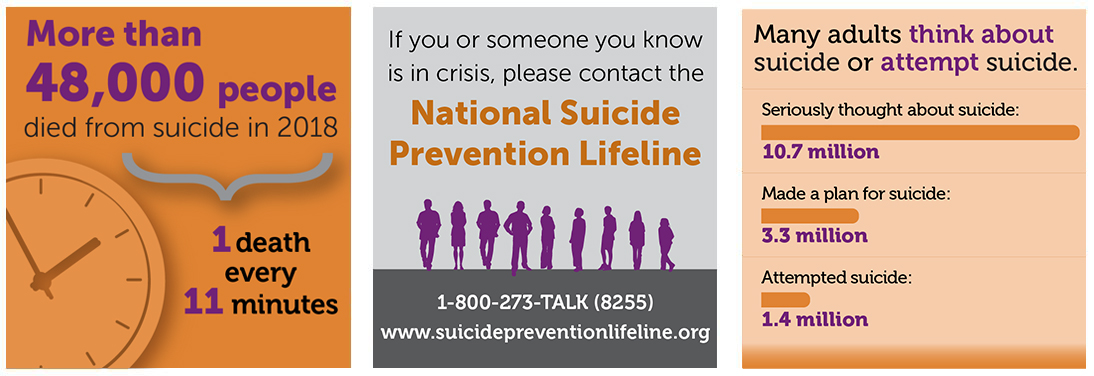
This blog post is meant to be the facts behind suicide, not so much an opinion about it. Facts are undeniable truths, so I felt it necessary to post this information from the Suicide Prevention Lifeline website. Their website has great information about suicide and how to prevent it, as well as the phone number to call if someone is suicidal. Below is the Lifeline phone number and information regarding new protocols.


Suicide Prevention Lifeline Information

National Suicide Prevention Lifeline

We can all help prevent suicide. The Lifeline provides 24/7, free and confidential support for people in distress, prevention and crisis resources for you or your loved ones, and best practices for professionals. 1-800-273-8255

FCC Designates 988 for the National Suicide Prevention Lifeline

The FCC has designated 988 as the new nationwide number for the National Suicide Prevention Lifeline to be completed by July 2022. In the meantime please continue to share 1-800-273-TALK (8255) with anyone wishing to connect to the Lifeline. 988 is NOT CURRENTLY ACTIVE nationally and may not connect callers to the Lifeline. LEARN

SuicidePreventionLifeline.org

Aware,

E.

#SuicidePreventionMonth #SuicidePreventionLifeline #FactsAboutSuicide #RiskFactors #WarningSigns #Stigma #1-800-273-TALK (8255) #Help #SaveALife #MentalHealth

Suicide Prevention Month

The month of September recognizes Sexual Health and how it affects our mental health, well-being, and self-esteem. September also takes time to acknowledge National Suicide Prevention. Putting to the forefront of our mind that people deal with issues that may not be apparent to us. Suicide is never a laughing matter and preys on all types of people, not just the “sad ones.”

CDC Website https://www.cdc.gov/violenceprevention/suicide/fastfact.html#:~:text=Suicide%20is%20death%20caused%20by,suicide%20and%20protect%20against%20it.

Suicide stems from suicidal thoughts and those thoughts derive from our mind. Suicidal tendencies are not a disease or sickness that simply leaves your life once they have visited. It is a serious mental health issue that can loom over us during our entire lifespan. Unlike the flu, asthma, or surgery, suicidal urges cannot be cured by a vaccine, an inhaler, or a trip to the surgery room. Suicidal urges/thoughts/tendencies are not a quick fix.

People can become suicidal by three factors: biology, external influences, and/or personal mental health. Our biology is what we are born with and is the most difficult factor to avoid because we cannot choose how we are born. Whether it is how our brain is physically created or our family medical history, we cannot choose the biology of our body. We may be born with depression, aggressiveness, etc. and must learn how to navigate through such emotions as we mature.

Another factor is through external influences, the imposition of the outside world affecting our inward opinions and thoughts. As mentioned in previous blog posts, external influences can affect our perspective on life and alter the reality we live in. Such influences include social media, advertisements, criticism, and factors that do not come from our independent/unique monologue. These are the forces that impact our conscious and subconscious mind; it is that little voice in the back of your head that raises positive or negative discrepancies.

The voice in the back of your head is usually negative because it is a survival instinct. It is what protects us from the unknown and keeps us safe. That same voice, however, can malfunction and cause our brain to tell us lies that make us depressed, lower our self-esteem, and feed us nothing but negativity. Personal mental health then becomes affected by the thoughts we think about regularly. If you feed a cow trash, it is going to taste like garbage (an aggressive analogy, but nonetheless true). If we feed our brain negative thoughts daily, then we, too, will become negative.

Negative thoughts can cause stress (a response to a situation that makes us feel threatened or anxious) if we fixate on the factors listed above. Stress is just like any other emotion and can be dealt with properly with the correct tools. These tools are called coping mechanisms and can be in the form of self-care, “connectedness,” and support. Coping mechanisms are important because they showcase support and ground someone who is suicidal. Although society has a stigmatic viewpoint about coping mechanisms, they are one of the best ways to deter suicide (not including medication).

People decide to take their own life for a multitude of reasons we may or may not ever discover. The best and incredibly important prevention technique is noticing the signs of a suicidal person early. If you notice early, then this allots time for professionals, family, friends, and even the suicidal person to help prevent his/her suicide. The main wants, in my opinion, that a suicidal person craves are support, attention, and affection. They want to be seen, heard, appreciated, and to feel like they are not alone. You would be surprised how a stranger’s smile can mean so much to someone who is suicidal. Be kind to everyone, you do not know what they are going through.

Kindly,

E.

#NationalSuicidePreventionMonth #SuicidePrevention #Suicide #CopingMechanisms #Negativity #Support #CDC #BeKind #Smile

The “F” Word. No, Not F*ck

Staying on the September theme of Sexual Health, we must respect others’ decisions in life, as well as how they choose to be spoken to. There a plethora of words that can be demeaning, discriminatory, and just plain hurtful to the LGBTQ+ community. Such words should never be used and should be the start of an educational conversation.

DISCLAIMER: I will be using very vulgar and nasty words in this blog post. Again, these words should never be used and may make you feel uncomfortable. If you do not feel comfortable being uncomfortable or reading such words, I would recommend not reading this post. Do keep in mind that this is meant to be educational and enlightening, not a means to disrespect anyone. As always, I appreciate your support, and completely understand if you choose not to continue reading. Thank you for understanding!

!!!WARNING: THIS IS YOUR Last chance to exit the blog post!!!

NEVER, EVER, EVERRR USE: Fag, faggot, dyke, cunt, twat, pussy, bitch, whore, slut, tranny/transvestite, ho/hoe, he-she, she-man, and sometimes queer (even though some say it has been reclaimed in the LGBTQ+ community). UGH! Even typing these words makes me feel disrespectful… Let me stress this again, THESE WORDS SHOULD NOT BE USED AT ALL IN ANY CONTEXT, “except in direct quotes that clearly reveal the bias of the person quoted” (https://www.glaad.org/reference/offensive). Some words I do not know or remember, but these are the “popular” words that ignorant people love to throw around.

The reasons why we do not want to use these words are because they are demeaning, disrespectful, demoralizing, defamatory, dehumanizing, and any other “de-” word you can think of. In essence, these words make people feel less human and take away their identity, and without an identity, people can become miserable, depressed, and feel worthless. Imagine feeling worthless? Feeling without worth, value, or use…a terrible thought and sensation that people live with (simply because of others’ own bias).

To add insult to injury, there are also statements and questions that people ask someone in the LGBTQ+ community that are not okay to state or ask. Try and do your best to avoid these statements/questions, because they do carry underlying implications. These include: “No homo, that is so gay, bisexuality does not exist, you are too femme/butch to be…, you do not look like a woman/man, what is your real name?, what are you really?” (https://lgbtqia.ucdavis.edu/educated/words).

From the website glaad.org: “The notion that being gay, lesbian or bisexual is a psychological disorder was discredited by the American Psychological Association and the American Psychiatric Association in the 1970s. Today, words such as ‘deviant,’ ‘diseased’ and ‘disordered’ often are used to portray LGBT people as less than human, mentally ill, or as a danger to society.” The statements/questions/words above relay the message that people in the LGBTQ+ community are less than human, which is simply not true. No one is less or more human than the other person. We are all equal and all deserve the same rights as anyone else.

Listen, I will be the first to admit that I do not know everything about LGBTQ+, and with changes happening every day, it is hard to keep up with what is okay and not okay. This does not mean, however, that I choose to remain ignorant or have a warped sense of perspective. It simply means that I must educate myself and those around me. We are all still learning, and it can be confusing to someone who has not experienced what the LGBTQ+ community has endured. It can be confusing but it is not difficult, and if you choose not to educate yourself and remain bias, then you are falling into the “ignorance pile.”

The lists are as large as the bias people have. We must be conscious of the words we choose, whether we understand it or not. Words carry more weight than people realize. This is crucial for people who are exploring their sexuality and want nothing more but to feel safe, comfortable, respected, and seen as human. Why does it matter what the other person chooses? How does that affect your life? It does not. Simple. Let people be free and live their life the same way you do. They deserve it, it is their right, it does not affect you, and to be honest, it is none of your business.

Mindful,

E.

References: https://www.glaad.org/reference/offensive | https://lgbtqia.ucdavis.edu/educated/words

#TheFWord #SexualHealth #MentalHealth #LGBTQ+ #LGBTQ+Community #SelfIdentity #EducateYourself #LoveIsLove #LoveWins #Equality #EqualRights #MindYourBusiness #GLAAD #UCDavis