The month of September recognizes Sexual Health and how it affects our mental health, well-being, and self-esteem. September also takes time to acknowledge National Suicide Prevention. Putting to the forefront of our mind that people deal with issues that may not be apparent to us. Suicide is never a laughing matter and preys on all types of people, not just the “sad ones.”
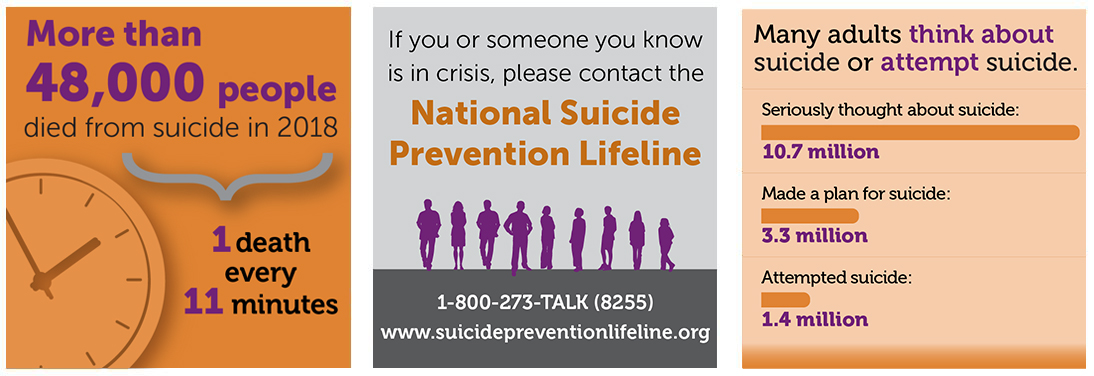
Suicide stems from suicidal thoughts and those thoughts derive from our mind. Suicidal tendencies are not a disease or sickness that simply leaves your life once they have visited. It is a serious mental health issue that can loom over us during our entire lifespan. Unlike the flu, asthma, or surgery, suicidal urges cannot be cured by a vaccine, an inhaler, or a trip to the surgery room. Suicidal urges/thoughts/tendencies are not a quick fix.
People can become suicidal by three factors: biology, external influences, and/or personal mental health. Our biology is what we are born with and is the most difficult factor to avoid because we cannot choose how we are born. Whether it is how our brain is physically created or our family medical history, we cannot choose the biology of our body. We may be born with depression, aggressiveness, etc. and must learn how to navigate through such emotions as we mature.
Another factor is through external influences, the imposition of the outside world affecting our inward opinions and thoughts. As mentioned in previous blog posts, external influences can affect our perspective on life and alter the reality we live in. Such influences include social media, advertisements, criticism, and factors that do not come from our independent/unique monologue. These are the forces that impact our conscious and subconscious mind; it is that little voice in the back of your head that raises positive or negative discrepancies.
The voice in the back of your head is usually negative because it is a survival instinct. It is what protects us from the unknown and keeps us safe. That same voice, however, can malfunction and cause our brain to tell us lies that make us depressed, lower our self-esteem, and feed us nothing but negativity. Personal mental health then becomes affected by the thoughts we think about regularly. If you feed a cow trash, it is going to taste like garbage (an aggressive analogy, but nonetheless true). If we feed our brain negative thoughts daily, then we, too, will become negative.
Negative thoughts can cause stress (a response to a situation that makes us feel threatened or anxious) if we fixate on the factors listed above. Stress is just like any other emotion and can be dealt with properly with the correct tools. These tools are called coping mechanisms and can be in the form of self-care, “connectedness,” and support. Coping mechanisms are important because they showcase support and ground someone who is suicidal. Although society has a stigmatic viewpoint about coping mechanisms, they are one of the best ways to deter suicide (not including medication).
People decide to take their own life for a multitude of reasons we may or may not ever discover. The best and incredibly important prevention technique is noticing the signs of a suicidal person early. If you notice early, then this allots time for professionals, family, friends, and even the suicidal person to help prevent his/her suicide. The main wants, in my opinion, that a suicidal person craves are support, attention, and affection. They want to be seen, heard, appreciated, and to feel like they are not alone. You would be surprised how a stranger’s smile can mean so much to someone who is suicidal. Be kind to everyone, you do not know what they are going through.
Kindly,
E.

#NationalSuicidePreventionMonth #SuicidePrevention #Suicide #CopingMechanisms #Negativity #Support #CDC #BeKind #Smile
 thEEsmilE
One thought on “Suicide Prevention Month”